Digital Arts
Digital art has fundamentally transformed how we create, share, and experience visual culture. Unlike traditional media bound by physical materials, digital art exists in a realm of infinite reproducibility, instant global distribution, and unprecedented creative freedom. From the precise mathematical elegance of vector graphics to the immersive depth of virtual reality installations, digital tools have opened creative pathways that would have seemed like science fiction just decades ago.
Yet this vast landscape can feel overwhelming for newcomers. The terminology alone—vectors, vertices, blockchain, generative algorithms—can create barriers to entry. This guide breaks down the major disciplines within digital art, explaining not just the technical foundations but the creative philosophies that drive each medium. Whether you’re drawn to the nostalgic charm of pixel art or the cutting-edge possibilities of code-based creation, understanding these foundational approaches will help you navigate the digital creative landscape with confidence.
Vector Art: The Power of Mathematical Precision
Vector art operates on a fundamentally different principle than traditional digital images. Instead of recording color information for thousands of individual pixels, vector graphics use mathematical formulas to define shapes, curves, and lines. Think of it like the difference between a photograph of a circle and the geometric instructions to draw a perfect circle—the latter can scale infinitely without losing quality.
This scalability makes vector art indispensable for logos, icons, and illustrations that need to work across multiple sizes—from business cards to billboards. Programs like Adobe Illustrator and Affinity Designer allow artists to manipulate anchor points and bezier curves, creating smooth, crisp artwork that remains razor-sharp at any resolution.
The creative decisions in vector work often revolve around stylistic choices. Flat design emphasizes simplicity and bold colors, while gradient mesh techniques can create surprisingly photorealistic effects through careful color blending. The key challenge lies in avoiding over-simplification—knowing when to add detail and when to embrace minimalism. For web use, optimizing vectors for SVG format ensures fast loading times while maintaining that perfect scalability.
Digital Painting: From Hand to Screen
Digital painting bridges the tactile world of traditional art with the flexibility of digital media. Modern pen displays and drawing tablets translate hand gestures into digital brushstrokes, attempting to replicate the natural feel of painting on canvas or paper. The technology has evolved dramatically, with factors like refresh rate, pressure sensitivity, and tilt recognition determining how faithfully a device captures artistic intent.
Many artists struggle initially with the disconnect between hand movement and screen response. The glass surface of most tablets feels fundamentally different from textured paper, leading some creators to apply paper-texture films for a more familiar tactile experience. Technical challenges like line jitter—unwanted wobble in slow, deliberate strokes—can frustrate artists until they learn to optimize brush settings and stabilization features.
Health considerations matter too. Repetitive strain injury (RSI) affects many digital artists who spend hours with their hand in drawing position. Taking regular breaks, maintaining proper posture, and using ergonomic grips can prevent long-term damage. The goal is finding a sustainable workflow that balances creative output with physical wellbeing.
Pixel Art: The Beauty of Limitation
Pixel art celebrates constraints as creative fuel. Working at low resolutions where every individual pixel matters, artists create images with a distinctive retro aesthetic that recalls early video games and computer graphics. The visible “jaggies”—those stair-step edges inherent to low-resolution imagery—become part of the artistic signature rather than a technical limitation.
The craft involves deliberate choices about limited color palettes, often restricting artwork to just 8, 16, or 32 colors. This constraint forces intentionality in every decision, creating a focused visual language. A hotly debated topic in the pixel art community is authenticity: should pixels be placed by hand, or is it acceptable to downscale high-resolution images? Most purists advocate for hand-placed pixels, arguing that automated downscaling lacks the intentional design that defines true pixel art.
Technical pitfalls include “mixels”—inconsistent pixel sizes that break visual cohesion when artists mix different resolutions. When exporting for social media, creators must carefully configure settings to prevent platforms from applying smoothing filters that blur the crisp pixel edges, defeating the entire aesthetic.
3D Art: Sculpting Virtual Worlds
Three-dimensional digital art creates volume and space that rivals physical sculpture, all within virtual environments. The discipline splits into multiple approaches, each with distinct workflows and aesthetic outcomes.
High-Poly Sculpting and Modeling
High-polygon modeling pursues detail and realism, using programs like ZBrush or Blender to create intricate surfaces. Artists must understand mesh topology—how vertices, edges, and faces connect to form 3D shapes. Texture mapping wraps 2D images around these 3D forms, adding color, patterns, and surface details.
The workflow debate centers on sculpting versus box modeling. Sculpting mimics working with clay, perfect for organic forms like characters and creatures. Box modeling starts with primitive shapes and refines them through systematic polygon manipulation, better suited for hard-surface objects like architecture or vehicles. The risk is creating impossibly high polygon counts that crash software or take hours to render. Optimizing lighting becomes crucial—dramatic shadows and highlights can transform a simple model into a stunning render.
Low-Poly Aesthetics
Low-poly art embraces geometric simplicity, creating recognizable forms from minimal triangular facets. This style has become popular not just for performance reasons (video games need efficient models), but as a distinct aesthetic choice. Artists work within strict vertex count budgets, making every polygon meaningful.
Technical skills include using smoothing groups to control which edges appear sharp or smooth, and the baking process—transferring detail from high-poly models onto low-poly versions through texture maps. Common pitfalls include non-manifold geometry (structural errors in the mesh) that cause rendering problems. Success in low-poly art often comes down to optimizing the silhouette—ensuring the form reads clearly even as a solid shadow.
Blockchain and Crypto Art: Redefining Digital Ownership
Blockchain technology has introduced new possibilities for digital artists, fundamentally addressing the question of ownership and scarcity in an infinitely reproducible medium. NFTs and crypto art create verifiable digital provenance, breaking free from the physical constraints that traditionally defined art market value.
The shift from static images to programmable art opens creative doors—artworks that evolve over time, respond to external data, or grant special utility to their owners. However, artists face new technical challenges like optimizing file sizes to fit blockchain storage limits and considering which platform to use, knowing that platform dependency creates risks if that ecosystem changes or disappears.
Collaborative possibilities expand through decentralized frameworks where multiple artists can contribute to evolving artworks, with blockchain tracking each contribution. The technology is still maturing, and artists must weigh creative possibilities against environmental concerns, transaction costs, and the volatility of crypto markets.
Time-Based Art: Animation, Motion Graphics, and Loops
Adding the dimension of time transforms static images into dynamic experiences. Motion graphics and animation require understanding principles like easing—how movement accelerates and decelerates to feel natural rather than mechanical. Syncing visuals to music beats creates rhythm and impact, turning abstract shapes into emotional experiences.
The production decision between 2D and 3D animation dramatically affects budget and time requirements. 2D frame-by-frame animation is labor-intensive but offers a distinctive handcrafted quality. 3D animation requires more upfront technical knowledge but can accelerate certain workflows through rigging and interpolation. Both approaches risk messy project files that become unmanageable without careful organization.
A specialized subset is the perfect loop—animations that cycle seamlessly, creating hypnotic, meditative viewing experiences. The challenge lies in making the “cut point” invisible, where the end flows naturally back to the beginning. For web distribution, optimizing GIF file sizes without sacrificing visual quality requires balancing frame rates, color palettes, and compression. The cinemagraph—a mostly static image with one subtle animated element—offers an alternative that captures attention without demanding full video production.
Generative and Code-Based Art
Generative art flips the traditional creative process: instead of directly creating an image, artists write algorithms and code that generate imagery. The artist becomes a system designer, setting rules and parameters that produce unique outputs, often incorporating randomness to create variation within defined boundaries.
The appeal lies in discovery—seeing what emerges from the system you’ve created. Interactive installations take this further, using sensors to respond to viewer movement, sound, or other inputs, making the audience an active participant in creation. The technical divide between pre-rendered and real-time generation determines hardware demands and creative possibilities.
Challenges include code obsolescence—artwork that depends on specific software versions or platforms may become unviewable as technology evolves. Performance optimization matters critically for real-time work, requiring artists to write efficient algorithms that run smoothly without overwhelming processors.
Immersive Experiences: VR, AR, and Interactive Storytelling
Immersive digital art surrounds viewers, creating experiences that engage multiple senses and challenge the passive gallery model.
Virtual Reality Art
VR art creates environments that trick the brain into feeling present in virtual spaces. Artists must understand motion sickness triggers—certain movements or frame rates can cause discomfort. Spatial audio adds crucial depth, with sounds positioned in 3D space around the listener. Design choices between room-scale experiences (where users physically walk) and seated experiences affect accessibility and creative approach. Headset fatigue limits session length, and mobile VR requires aggressive polygon optimization to run on less powerful hardware.
Virtual Goods and Digital Assets
Items that exist purely digitally carry value in virtual worlds and games. Understanding interoperability—whether assets work across different platforms—affects both technical creation and market value. AR capabilities let these virtual objects appear in physical spaces through smartphone screens. The value debate continues: do utility features matter more than pure cosmetic appeal? The risk of server shutdown looms—what happens to digital possessions when the platform hosting them closes? Creating web-optimized 3D assets requires balancing visual quality with file size constraints.
Interactive Narratives
Non-linear digital storytelling lets audiences choose their path through experiences. Environmental storytelling—where narrative emerges from exploring spaces rather than watching linear sequences—requires different design thinking. Guiding user attention without traditional camera cuts challenges creators to use lighting, sound, and spatial design. Balancing passive observation with active participation affects how deeply audiences engage, but branching complexity can spiral out of control without careful structure. Immersive audio design completes the experience, spatializing sound to enhance presence and emotional impact.
The digital art landscape continues evolving as new tools emerge and creative communities push boundaries. Each medium offers unique creative possibilities and technical challenges. The most exciting work often happens at the intersections—pixel art in VR environments, generative algorithms creating traditional-looking paintings, blockchain enabling new forms of collaborative creation. By understanding these foundational approaches, you can navigate this rich creative territory and find the methods that resonate with your artistic vision.
Immersive Storytelling: How to Tell a Story When the Viewer Can Look Anywhere?
The greatest challenge in immersive storytelling isn’t the technology, but the loss of the director’s frame. Instead of relinquishing control, successful creators master the art of invisible guidance. This guide explores how to use environmental narrative, sensory choreography, and curated…
Read more
Loop Movement: Why Are Seamless GIFs So Satisfying to the Human Brain?
The hypnotic power of a perfect loop is not an artistic accident; it’s a deliberate cognitive hack that satisfies the brain’s deep-seated need for predictable patterns. Seamless loops work by creating a state of “structured predictability,” which minimizes cognitive load…
Read more
Dynamic Visuals: How Generative Art Creates Infinite Variations from One Code?
The magic of generative art isn’t random chaos, but the creation of an “algorithmic soul”—a deliberate system of rules that gives infinite variations a coherent identity and artistic intent. Controlled randomness, using tools like Perlin noise, provides structure and aesthetic…
Read more
Motion Design: Why Does Movement Increase Engagement by 400% on Social Media?
Many believe that simply making graphics move is enough to capture attention. The reality is that engagement comes not from movement itself, but from the quality of that movement. Effective motion design is a form of applied psychology, using principles…
Read more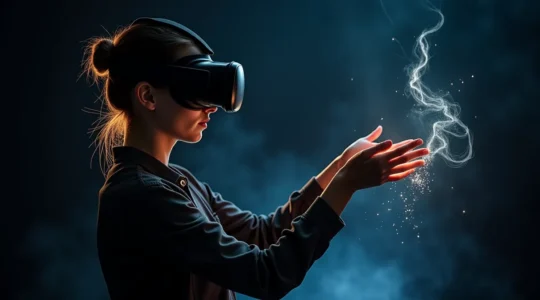
VR Presence: How to Design Virtual Art That Feels Physically Real?
Creating true VR presence isn’t about chasing perfect graphics; it’s about strategically deceiving the user’s brain. Vestibular coherence and binaural audio have a greater impact on immersion than texture resolution. Narrative and lighting must guide, not force, a user’s attention…
Read more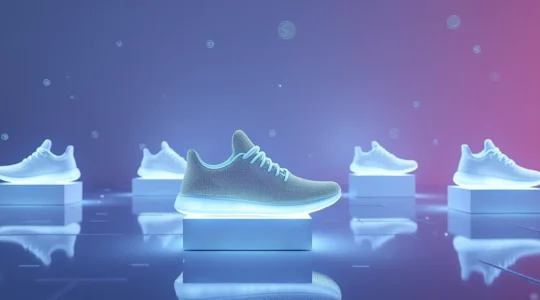
The Virtual Economy: Deconstructing the Real-World Value of Digital Assets
The value of a virtual object isn’t just a digital copy of physical-world economics; it’s a new asset class defined by the tension between platform-specific utility and the dream of universal ownership. Digital assets derive value from a mix of…
Read more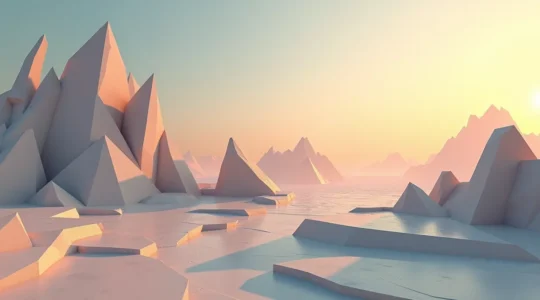
Polygon Aesthetics: Why Low-Poly Art Is a Style Choice, Not Just an Optimization?
Low-poly design isn’t a technical compromise; it’s a discipline of intentional abstraction that forces a focus on the essence of an object. The style demands mastery of core artistic principles like silhouette, form, and lighting, often making it more challenging…
Read more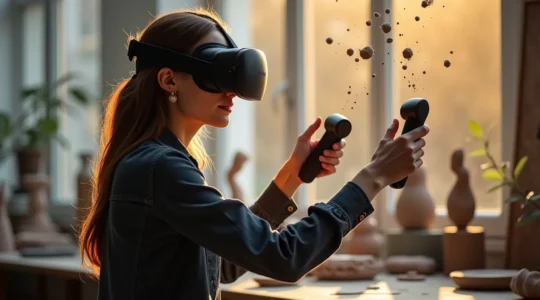
Virtual Sculpting: How to Mold Digital Clay Without Getting Your Hands Dirty?
text Achieving lifelike virtual sculptures hinges not on software mastery, but on applying timeless artistic principles of structure and light to the digital medium. Proper topology is the non-negotiable foundation for believable deformation and animation. Lighting isn’t an afterthought; it’s…
Read more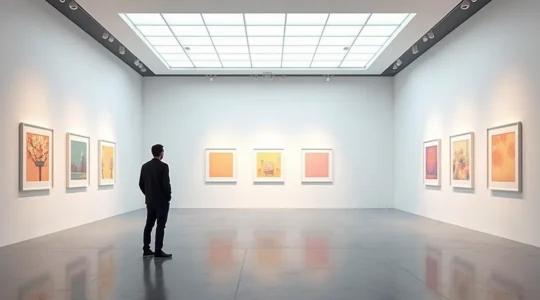
Pixel Art Lines: Why Are 8-Bit Aesthetics Making a Comeback in High-End Art?
Pixel art’s comeback isn’t about nostalgia; it’s a renaissance of craftsmanship where limitation is the main feature. The value of modern pixel art lies in the mastery of its constraints, celebrating the deliberate placement of every single dot. This art…
Read more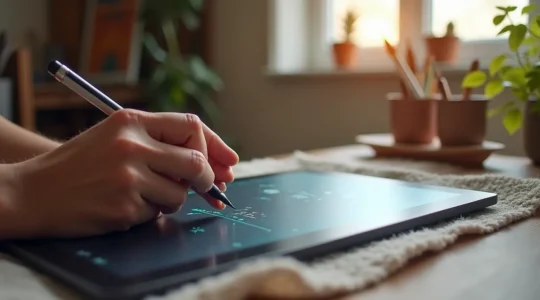
Tablet Mastery: How to Configure Pressure Sensitivity for a Natural Feel?
Frustrated that your digital strokes don’t feel natural? The disconnection often isn’t just a poorly set pressure curve. Achieving a tactile response on screen requires building a complete sensory feedback loop. This guide deconstructs the entire system, from hardware bottlenecks…
Read more