
Gaining access to the art world’s most exclusive digital works is not a game of speed or chance; it’s a calculated exercise in strategic capital allocation and signaling.
- True access is granted based on your reputation and the quality of your existing collection, which acts as your digital C.V.
- Distinguishing between fleeting ‘artificial scarcity’ and enduring ‘true rarity’ is the fundamental skill for long-term value creation.
Recommendation: Begin by deploying an initial $5,000 not on hype, but on a carefully curated piece from a ‘mid-career’ artist to signal your seriousness and unlock access to higher-value circles.
You see the notification, but it’s already too late. The piece you had your eye on—the one from a truly promising digital artist—is marked “Sold.” It never even appeared on the public marketplace. Welcome to the frustrating reality of the digital art world’s velvet rope. For every publicly announced “drop,” there are a dozen private sales happening in “hidden rooms,” accessible only to a select few. The common advice you’ll hear is to be faster, to join sprawling Discord communities, or to get on endless “whitelists.” This is advice for the masses, designed to create noise and hype.
But for the serious collector, the path to acquisition is not paved with frantic clicks or relentless social media grinding. The real game is played on a different level entirely. It’s a subtle, strategic dance where capital does the talking and your digital wallet becomes your curatorial statement. The key isn’t about *how fast* you are, but *who you are* in the eyes of the artist, the gallery, and the tight-knit community of elite collectors. Forget the noise of the open market; the most significant opportunities are found behind closed doors.
This is not about chasing hype. It is about understanding the unspoken rules of digital provenance, the psychology of scarcity, and the art of “capital signaling”—using strategic acquisitions to build a reputation that precedes you. This guide will not tell you how to compete with bots; it will show you how to bypass them entirely. We will deconstruct the mechanisms that grant early access, differentiate between assets that hold value and those that fade, and outline a precise strategy for using a modest initial investment to unlock doors to works valued tenfold. This is the playbook for the inner circle.
To navigate this exclusive landscape, it’s essential to understand the distinct strategies and market dynamics at play. This guide is structured to walk you through the very same process we use to advise our clients, from understanding the power structures to executing a flawless international acquisition.
Summary: Unlocking the Gates to Exclusive Digital Art
- Why Top Tier Collectors Get Links to Exclusive Works 48 Hours Before You?
- How to Win the Race for a Limited Exclusive Drop Without Bots
- Artificial Scarcity vs. True Rarity: Which One Holds Value After 10 Years?
- The Copyright Mistake That Means You Don’t Actually Own the Image
- How to Spend Your First $5,000 to Unlock Access to $50,000 Works
- Why Print 1/10 is Psychologically More Valuable Than Print 10/10?
- When to Buy: Catching the ‘Mid-Career’ Pivot Point for Maximum ROI
- Verified International Acquisition: How to Buy Art Abroad Without Customs Nightmares?
Why Top Tier Collectors Get Links to Exclusive Works 48 Hours Before You?
That coveted 48-hour head start is not a matter of luck; it is the result of a deliberate, structured ecosystem designed to reward established players. The digital art market, much like its physical counterpart, operates on trust and reputation. Galleries and artists prioritize collectors who have a proven track record of holding, appreciating, and promoting high-quality work. Sending a private link is a low-risk way to ensure a significant piece goes to a “good home” rather than to a speculative flipper who might immediately list it on a secondary market, potentially devaluing the artist’s brand.
These relationships are increasingly formalized through private collector groups and Decentralized Autonomous Organizations (DAOs). These are not public forums; they are curated, often invitation-only, digital societies where members pool capital and share insights. Being part of such a group immediately elevates your status from an individual buyer to a member of a recognized collecting entity. According to recent data from Collective Shift, at least 27 NFT investment funds and 15 collector DAOs are actively shaping the market. Gaining entry to these DAOs often requires holding a specific token or being voted in by existing members, a process that itself is a form of vetting. This structure ensures that access remains within a circle of trusted, high-conviction buyers.
Ultimately, early access is a currency earned through strategic participation. It’s about building a collection that signals sophistication and a long-term vision. Every piece in your wallet tells a story about your taste and market acumen. When that story aligns with the goals of a premier artist or gallery, you are no longer just a buyer; you are a patron. And patrons are always the first to be called.
How to Win the Race for a Limited Exclusive Drop Without Bots
While the ultimate goal is to transcend the frantic race of public drops, one must first master its mechanics. Competing in a high-demand, limited-edition drop is less about brute force and more about meticulous preparation. Relying on bots is a crude and often unreliable strategy that can lead to failed transactions and blacklisted wallets. The sophisticated collector wins not by being faster, but by being smarter and more prepared, eliminating every possible point of friction before the countdown hits zero.
This preparation is a non-negotiable ritual. It involves a series of deliberate actions that ensure you are positioned for success when the minting window opens. Think of it as preparing for a high-stakes auction; you wouldn’t walk in without your financing in order and your bidding strategy clear. The same diligence applies here.

As the image suggests, the moments before a drop are about intense focus and readiness. Every element, from your wallet to your network connection, must be optimized. The following steps are not merely suggestions; they are the absolute minimum barrier to entry for securing a valuable piece in a competitive environment.
Your Pre-Drop Execution Protocol
- Wallet & Funding: Pre-load your dedicated crypto wallet (e.g., MetaMask) with more than the required amount of cryptocurrency (typically ETH) to comfortably cover the piece and potentially volatile gas fees.
- Whitelist Confirmation: Days before the drop, verify your wallet address is officially on the whitelist. Engage with the project’s community on their preferred platform to confirm your status and understand the precise minting mechanics.
- Calendar Synchronization: Use multiple specialized NFT drop calendars (like Rarity.tools or NFTCalendar.io) and set redundant alerts for 1 hour, 15 minutes, and 5 minutes before the drop. Time zone errors are an amateur mistake.
- Gas Fee Strategy: During times of high demand, network congestion can cause gas fees to surge. Use a gas fee estimator tool moments before the drop to set a competitive, but not exorbitant, priority fee to ensure your transaction is processed quickly.
By executing this protocol, you remove variables and compete on strategy, not on luck. This level of preparation is the first signal you send that you are a serious contender, not a casual participant.
Artificial Scarcity vs. True Rarity: Which One Holds Value After 10 Years?
In the digital realm, not all scarcity is created equal. Understanding the distinction between artificial scarcity and true rarity is perhaps the single most important skill for building a collection with enduring value. Artificial scarcity is manufactured; it’s the 10,000-unit profile picture (PFP) collection or the “limited edition” drop designed primarily to generate hype and immediate sales. While it can create short-term demand, its value is fragile and highly dependent on sustained marketing and community momentum.
True rarity, on the other hand, is inherent and organic. It stems from an artwork’s historical significance, cultural impact, or unimpeachable provenance. A piece that is one of the first-ever works by a now-famous artist, a work that pioneers a new technical or aesthetic style, or a 1-of-1 piece from a master’s collection possesses true rarity. Its value is not tethered to a fluctuating floor price but grows over time as its importance within the history of digital art becomes more widely recognized. The market itself has begun to punish manufactured hype; market data from Kraken reveals that NFT trading volume declined from $12.6 billion in Q1 2022 to $3.9 billion in Q1 2024. In this cooler, more discerning market, only works with true rarity will hold and appreciate in value.
A third category, utility-based scarcity, links the value of the token to exclusive access or benefits. This can be a potent driver, but its long-term value is contingent on the brand or artist continuing to deliver that utility. The following framework is essential for assessing where a potential acquisition falls on this spectrum.
| Scarcity Type | Initial Value Driver | Long-term Value Retention | Example |
|---|---|---|---|
| Artificial Scarcity (Limited Editions) | Fixed supply cap | Moderate – depends on continued demand | 10,000 unit PFP collections |
| True Rarity (Historical Significance) | Cultural importance & provenance | High – increases with time | First NFTs from renowned artists |
| Utility-Based Scarcity | Access to exclusive benefits | Variable – tied to ongoing utility | Membership tokens with ongoing perks |
A discerning collector focuses their capital almost exclusively on the “True Rarity” and highly selective “Utility-Based” categories. Chasing artificial scarcity is a speculator’s game, not an investor’s strategy.
The Copyright Mistake That Means You Don’t Actually Own the Image
One of the most pervasive and dangerous misconceptions in the digital art space is the conflation of token ownership with copyright ownership. Acquiring an NFT does not, by default, grant you any intellectual property rights to the underlying artwork. This is a critical legal distinction that every serious collector must understand to avoid costly assumptions.
When you purchase an NFT, you are acquiring a unique token on a blockchain that points to a piece of metadata. This metadata typically contains a link to the actual media file (the image, video, or audio) and a description of the work. You own the token itself—a cryptographically secured entry in a digital ledger. What you can *do* with the associated artwork is entirely dictated by the license that the artist attached to the sale. This can range from a Creative Commons (CC0) license, which effectively places the work in the public domain, to a highly restrictive “personal use only” license that prohibits any form of commercialization.
Furthermore, there is the technical risk of the media file’s storage. Many NFTs store their associated artwork “off-chain” on platforms like the InterPlanetary File System (IPFS) to save on costs. While robust, this system relies on “pins” to keep the data available. If a file becomes unpinned, the link in your NFT’s metadata could eventually point to nothing. You would still own the token, but its associated artwork would be lost. A truly premium NFT will either store its art “on-chain” (a much more expensive and permanent method) or have ironclad assurances about its off-chain storage. Failing to verify both the licensing terms and the storage method before an acquisition is a fundamental error.
How to Spend Your First $5,000 to Unlock Access to $50,000 Works
The path to accessing six-figure digital art does not begin with a six-figure purchase. It begins with a far more strategic maneuver: using a modest initial investment to signal your taste, seriousness, and long-term commitment. This is the art of Capital Signaling. In a market flooded with low-value transactions—where market analysis shows that 53.6% of NFT sales are under $200—a single, deliberate purchase in the $2,500 to $5,000 range immediately distinguishes you from the noise. It tells the community that you are not a speculator hunting for a quick flip; you are a collector making a considered investment.
This first significant purchase is your calling card. It should not be spent on the most hyped project of the week. Instead, it must be a thoughtful acquisition of a work from an artist who is at a critical juncture: the “mid-career pivot.” This is an artist with a proven track record and critical respect who is beginning to gain wider institutional recognition. A piece from this period is a statement of curatorial foresight. It demonstrates you can identify value before it becomes consensus.
Your public wallet is your new C.V. When a gallery or artist is considering you for a private sale, they will review your collection. A wallet cluttered with free airdrops and low-effort PFPs signals a lack of focus. A wallet containing a few, carefully chosen, high-quality pieces tells a story of sophistication and intent. The goal of your first $5,000 is not to acquire an asset that will immediately 10x in value; it is to acquire an asset that grants you entry into the conversations where $50,000 assets are sold. Your initial portfolio should be audited against criteria that prove this intent.
Checklist: Auditing Your Entry Portfolio for Maximum Impact
- Strategic Artist Selection: Does the portfolio feature at least one piece from a recognized, mid-career artist rather than just emerging or “blue-chip” names?
- Provenance and Edition: Have you prioritized acquiring a significant edition number (e.g., 1/X, artist’s proof) or a work from a pivotal, small-batch collection?
- Platform Curation: Were your key acquisitions made on curated, high-end platforms (e.g., Foundation, Art Blocks, SuperRare) that signal a preference for quality over quantity?
- Wallet Aesthetics: Is your public-facing wallet “clean,” exclusively showcasing your best pieces, or is it diluted with miscellaneous, low-value tokens and airdrops?
- Signaling Intent: Does the collection tell a coherent story about your taste and thesis, or does it appear random and trend-driven?
Treating your first major acquisition with this level of strategic rigor is what separates the aspiring collector from the established one. It is the key that turns a $5,000 investment into a passport for the entire high-end market.
Why Print 1/10 is Psychologically More Valuable Than Print 10/10?
In the world of limited editions, all numbers are not created equal. While every piece in a series of ten is technically just as rare as the others, the market consistently places a premium on the first print. A piece marked “1/10” will almost invariably command a higher price and be more sought-after than the one marked “10/10.” This phenomenon is not driven by logic, but by powerful psychological biases that are deeply ingrained in the collector’s psyche.
The primary force at play is the Anchoring Effect. The number “1” serves as a powerful psychological anchor, implying primacy, originality, and proximity to the artist’s creative act. It feels like *the* first one, the blueprint from which all others followed. Ownership of the first edition carries a unique narrative weight; it’s a story that can be told and retold, adding to the piece’s intangible value. This concept of narrative value is central to what we call Digital Provenance—the story and history of a token that contribute as much to its worth as the artwork itself.
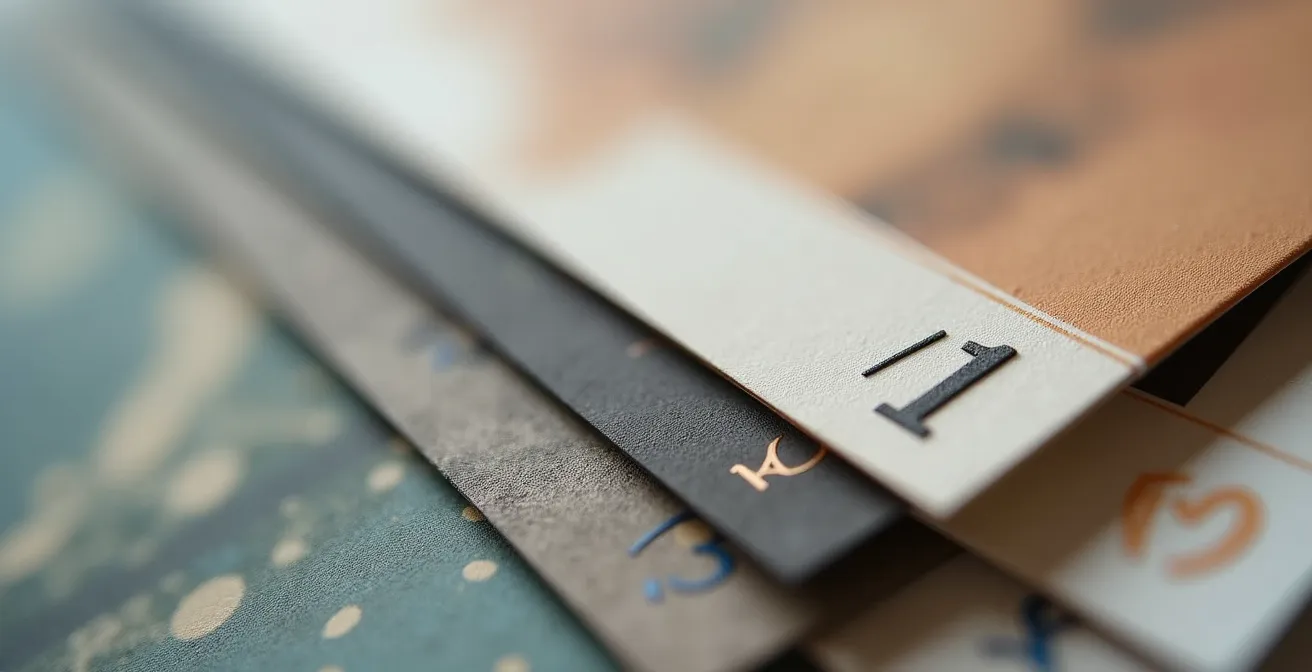
Conversely, the last number in an edition, such as “10/10,” can be perceived, however unconsciously, as the end of the line, the final copy. While some collectors specialize in acquiring final editions, the broader market sentiment overwhelmingly favors the primacy of the first. This is compounded by the “Artist’s Proof” (AP) editions, which exist outside the main numbered series and are traditionally the first prints pulled for the artist’s personal review. These often carry the highest premium of all, as they are the most closely associated with the artist’s direct involvement.
For a strategic collector, this is not a trivial detail. When given the opportunity to acquire a piece from a numbered edition, always prioritize the lowest available number. You are not just buying a piece of art; you are acquiring a more potent piece of its story. This superior Digital Provenance will directly translate to higher long-term value and greater desirability on the secondary market.
Key Takeaways
- Strategic Capital Signaling: A deliberate, well-researched initial purchase is more valuable for gaining access than dozens of low-value, trend-driven buys.
- True Rarity Over Hype: Long-term value resides in works with historical significance and cultural importance, not in manufactured scarcity from mass-produced collections.
- Your Wallet is Your C.V.: Your public collection is constantly being evaluated. A curated, focused wallet is your most powerful tool for demonstrating your seriousness to galleries and artists.
When to Buy: Catching the ‘Mid-Career’ Pivot Point for Maximum ROI
Timing, in art investment, is everything. While newcomers chase hyped-up initial drops and blue-chip collectors compete for multi-million dollar masterworks, the greatest opportunity for significant return on investment often lies in a specific, often overlooked phase: the ‘Mid-Career’ Pivot Point. This is the moment an artist, having already established a unique voice and a dedicated following, begins to gain serious institutional and critical recognition. Acquiring their work just before this pivot becomes widely acknowledged is the hallmark of a truly astute collector.
Identifying this pivot requires looking beyond floor prices and social media buzz. It involves tracking a different set of signals: an artist’s first solo show at a respected gallery, their inclusion in a curated museum exhibition, or a significant evolution in their artistic style that signals a new level of maturity and ambition. These are the leading indicators of an imminent market revaluation. As the broader market matures, with the global NFT market valued at $36 billion in 2024 and forecast to reach $49 billion in 2025, the ability to identify these inflection points becomes increasingly lucrative.
Waiting for the artist to be featured in a major publication means you are already too late; the premium will have been priced in. The strategic move is to accumulate their work when the secondary market prices have not yet caught up to the primary market’s growing prestige. This dashboard of market signals serves as a confidential guide for timing these critical acquisitions.
| Market Signal | Timing Indicator | Action Recommended |
|---|---|---|
| Gallery Representation | Artist signs with major gallery | Buy immediately pre-announcement |
| Institutional Purchase | First museum acquisition | Strong buy signal for remaining works |
| Style Evolution | Significant artistic pivot observed | Accumulate previous style works |
| Secondary/Primary Gap | Floor price exceeds mint by 2x+ | Mid-career revaluation imminent |
By monitoring these qualitative milestones rather than just quantitative price action, you position yourself to acquire foundational works at a fraction of their future value. This is not speculation; it is a calculated investment based on the predictable lifecycle of an artist’s career.
Verified International Acquisition: How to Buy Art Abroad Without Customs Nightmares?
As your collection grows in sophistication, your acquisition targets will inevitably become global. Purchasing a high-value digital asset from an artist or gallery in a different country introduces layers of complexity that must be managed with precision. While digital art bypasses the logistical nightmares of physical shipping and customs, it presents its own set of challenges in verification, payment, and tax compliance.
The first hurdle is seller verification. The decentralized nature of the market is both a blessing and a curse. When dealing with an international entity, you must conduct enhanced due diligence. This means going beyond their social media presence. Look for mentions in credible, independent art publications. Cross-reference their stated gallery representation. If possible, seek an introduction through a trusted mutual contact in the art world. A significant international acquisition should never be conducted with an unvetted party.
The second, and most critical, consideration is tax liability. The regulatory framework for digital assets is a patchwork of disparate and rapidly evolving laws. A cross-border transaction can trigger tax obligations in the seller’s jurisdiction, the buyer’s jurisdiction, and potentially even the location of the marketplace servers. A common mistake is assuming that the anonymity of a crypto wallet obviates the need for tax reporting. This is a fallacy that can lead to severe legal and financial repercussions. Engaging a specialist tax advisor with expertise in digital assets and international law is not an optional expense; it is a mandatory part of any significant cross-border acquisition strategy. Navigating these complexities without expert guidance is a risk no serious collector should ever take.
Your collection is a testament to your vision. To ensure it is built on a foundation of true rarity and strategic access, the next step is a confidential portfolio review to identify opportunities and mitigate risks.
Frequently Asked Questions on Exclusive Digital Art Acquisition
What exactly do I own when I buy an NFT?
You own the unique token itself on the blockchain and whatever specific rights are granted in its associated smart contract. Crucially, this typically does not include the copyright to the underlying artwork unless it is explicitly transferred in the terms of the sale.
Can the image file disappear even if I own the NFT?
Yes. If the artwork’s image file is stored “off-chain” (for example, on a service like IPFS) and the file becomes “unpinned” or the hosting service fails, the token you own could end up pointing to a dead link. You would still own the token, but the visual art would be gone.
What are the different license types for NFTs?
Common licenses vary widely and have massive implications for what you can do with the art. They include CC0 (placing it in the public domain), limited commercial rights (allowing you to monetize it under certain conditions), personal use only (for display but not commercial use), or a full copyright transfer, which is rare.
How do cross-border NFT transactions work?
Technically, they work the same as domestic ones, via a blockchain transaction. However, the legal and financial implications are far more complex. The sale of a digital good can trigger tax and regulatory scrutiny in both the buyer’s and seller’s home countries.
What are the tax implications for international NFT purchases?
Tax obligations for digital goods are a complex and jurisdiction-dependent minefield. Liability can be determined by the seller’s location, the buyer’s location, or even the physical location of the marketplace’s servers. Professional tax advice is non-negotiable for any significant international purchase.
How can I verify the authenticity of international NFT sellers?
Look for third-party validation. Credible news outlets and established art journals will often report on well-known artists or brands releasing NFT collections. Furthermore, verify if the artist is represented by a reputable real-world gallery, as this adds a significant layer of credibility and recourse.