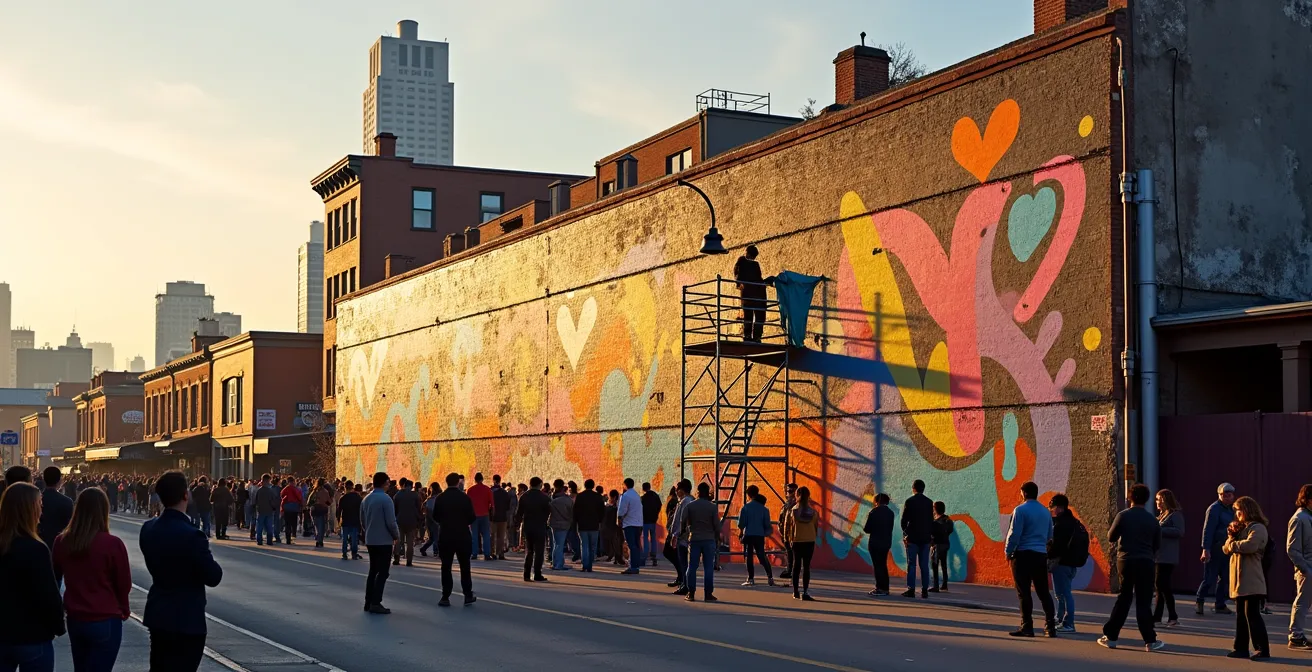
Street art festivals are not just making art more accessible; they’re creating a cultural battleground where creativity clashes with commerce.
- The same murals that revitalize a neighborhood can also trigger gentrification, displacing the very communities they claim to represent.
- Authenticity is a paradox: the more popular and “sanctioned” the art becomes, the more it risks losing its raw, rebellious soul.
Recommendation: To truly experience street art, look beyond the “Instagrammable” walls. Seek the dialogue between the sanctioned festival piece and the unsanctioned alley tag—that’s where the real story is.
Forget the hushed halls and “do not touch” signs of traditional museums. A different kind of cultural institution is taking over our cities, one without walls, entry fees, or formal curators. This is the world of street art festivals, vibrant explosions of color and creativity that turn entire neighborhoods into sprawling, open-air galleries. As a city guide who’s spent years walking these painted streets, I can tell you the energy is electric. You’re not just viewing art; you’re walking through it, feeling the pulse of a community on every corner.
For travelers and art lovers, this shift is a game-changer. It offers a chance to experience culture that is alive, evolving, and deeply connected to its environment. But there’s more to this story than just pretty pictures. This movement is a complex cultural battleground. It pits the raw, unsanctioned energy of graffiti against the organized, commercial-friendly world of festivals. It raises tough questions about who art is for, who benefits from it, and what “authenticity” even means when a rebellious act becomes a tourist attraction.
This guide isn’t just about showing you where to find the best murals. It’s about pulling back the curtain on the authenticity paradox. We’ll explore how a beautiful wall can be both a sign of renewal and a harbinger of displacement. We’ll give you the tools to be a discerning and respectful observer, to understand the ephemeral dialogue happening on the walls, and to find the true soul of a city in its art. Let’s hit the streets and start reading the stories the buildings have to tell.
This article will guide you through the complex and fascinating world of urban art. From its economic impact to the ethical questions it raises, you’ll gain a deeper understanding of this global movement. Here’s what we’ll cover:
Summary: Open-Air Galleries and the Urban Art Revolution
- Why a Mural Festival Can Raise Property Values in a District by 15%?
- How to Map a Walking Route to Hit the Best Walls Without Backtracking?
- Sanctioned Festival or Illegal Alley: Which Offers the Truer Vibe?
- The Fading Wall: Why You Should Visit That Mural This Year Before It’s Gone?
- How to Photograph Murals Without Blocking the Sidewalk or Annoying Residents?
- Why Murals Appear Just Before Rents Go Up in a Neighborhood?
- The Prestige Trap: When a Prime Address Hides Mediocre Curation
- Urban Art Narratives: How Street Art Speaks for Marginalized Communities?
Why a Mural Festival Can Raise Property Values in a District by 15%?
Let’s start with the money because it’s the most visible sign that street art has gone from a subculture to a major economic force. When a drab industrial district suddenly blossoms with world-class murals, it doesn’t just attract art lovers—it attracts investment. These festivals act as massive, free marketing campaigns for a neighborhood, signaling that it’s a place of culture, creativity, and vibrancy. This newfound “cool factor” makes the area more desirable for new businesses, residents, and, of course, tourists.
The economic ripple effect is undeniable. Local cafes and shops see a surge in foot traffic during and after a festival. The area gains a reputation, drawing visitors who might have otherwise never set foot there. This increased interest directly translates into economic growth. In fact, one report highlighted a 12% rise in cultural-tourist spending within two years in cities with strong urban art programs. This boost in commerce and desirability inevitably leads to a rise in demand for property in the area.
As a result, property owners see the value of their assets climb. What was once a overlooked part of the city becomes a prime location. While the 15% figure is a general benchmark, the principle holds true: sanctioned public art is a powerful tool for urban regeneration. It transforms public perception, stimulates the local economy, and ultimately increases the financial worth of a neighborhood’s real estate. However, this shiny coin has a flip side, where rising values create new challenges for the original community.
How to Map a Walking Route to Hit the Best Walls Without Backtracking?
Alright, you understand the context, and you’re ready to explore. The worst thing you can do is wander aimlessly and miss the best pieces. A little planning transforms a casual stroll into a curated art adventure. The goal is to create a logical loop or a point-A-to-point-B journey that maximizes your art intake and minimizes zigzagging across town. Forget generic tourist maps; you need an explorer’s strategy.
Your first move should be to check for dedicated apps. Platforms like Street Art Cities provide crowd-sourced maps that are often updated in real-time by a community of spotters. Some apps like Canvs even offer augmented reality features, bringing the art to life with artist commentary. Before you go, decide on a theme for your tour. This adds a narrative layer to your exploration and makes it more memorable. You could follow a single artist’s work across the city, focus on a specific technique like wheat-pastes or stencils, or hunt for murals centered on social or political themes.
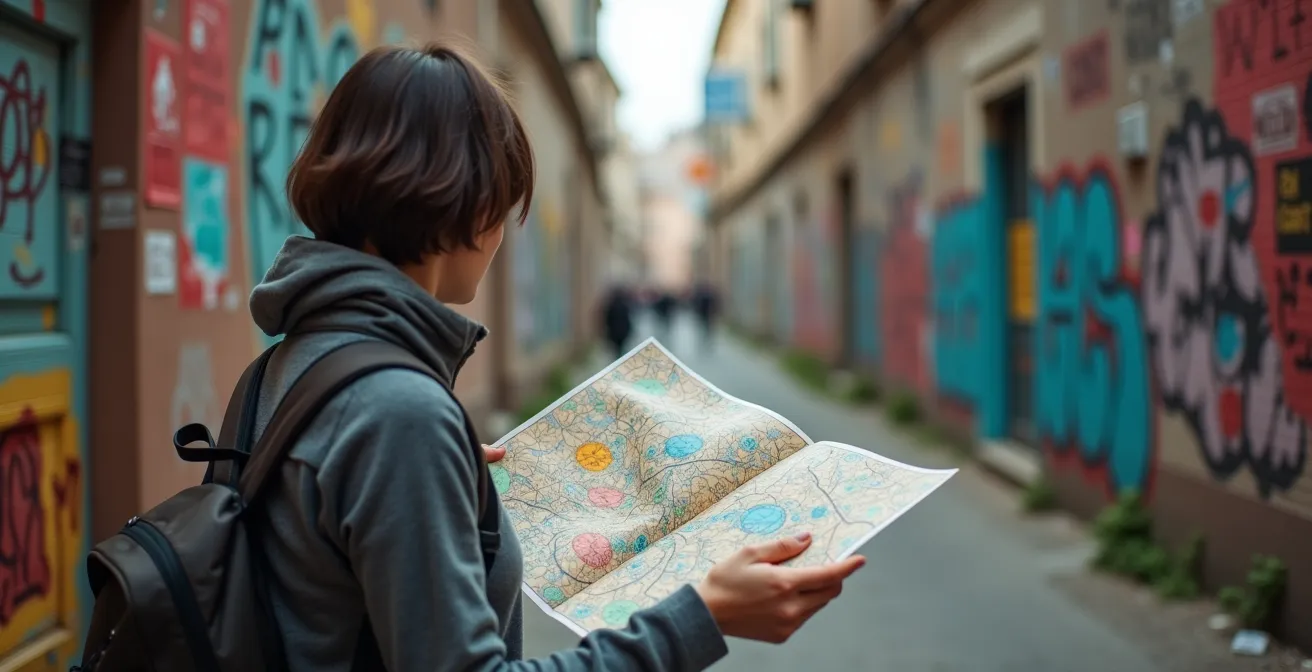
As the map above suggests, sometimes the old-school method is part of the charm. Creating your own map can be a rewarding process. Use a digital tool or a physical map to pin the locations you want to see, then connect the dots to form the most efficient path. Here are a few strategies for a self-guided tour:
- Thematic Routes: Go beyond just seeing art. Create a journey based on a theme, whether it’s chronological (following an artist’s evolution), technical (paste-ups vs. murals), or political.
- Digital Companions: Use apps like the Street Art Cities platform to find real-time locations, artist details, and community notes on the condition of the work.
- ‘Third Space’ Exploration: Don’t just stick to the main festival walls. Actively seek out the semi-sanctioned zones, like legal graffiti walls or underpasses, where a different, often rawer, form of creativity thrives.
Remember, the best discoveries are often made in the spaces between the famous murals. A well-planned route gives you the structure to explore confidently, while still leaving room for the spontaneous magic of stumbling upon a hidden gem in an unexpected alleyway. This balance of planning and spontaneity is the essence of urban exploration.
Sanctioned Festival or Illegal Alley: Which Offers the Truer Vibe?
This is the heart of the “authenticity paradox” every street art lover grapples with. On one hand, you have the sanctioned festival: massive, spectacular murals painted by internationally renowned artists on prime real estate. It’s accessible, family-friendly, and undeniably impressive. The scale and technical skill on display are often breathtaking. This is art as a public spectacle, celebrated and promoted by the city.
On the other hand, you have the illegal alley. This is the birthplace of the culture—raw, urgent, and unsolicited. Here, art is a dialogue, with artists tagging, pasting, and painting over each other’s work in a constant, evolving conversation. There are no permits, no corporate sponsors, and no guarantee the work will last the week. This is art as an act of rebellion or expression, existing for its own sake, not for an audience. It’s in these liminal spaces that you find what many consider the “truer vibe” of street art.
Case Study: The Street Museum of Art (SMoA)
Founded in 2012, The Street Museum of Art perfectly embodies this rebellious spirit. Instead of creating a gallery, its founders practice “guerrilla curation.” They identify existing, often illegal, street art pieces and install museum-style didactic labels next to them. As described on their website, SMoA brings museum concepts outside where artists thrive, challenging the very idea that art needs an institution to be validated. The exhibitions are ephemeral, disappearing when a piece is painted over or cleaned, which powerfully highlights the transient nature of the medium and questions the need for formal preservation.
As street art blogger Giulia points out, the best festivals find a way to bridge this gap. She argues that “a good street art festival should encourage artists to work outside traditional frameworks and support spontaneous, unplanned art creation.” The truth is, you need both. The festival provides the “wow” factor and brings new audiences to the art form. The alley provides the soul and reminds us of its roots. The most rewarding experience comes from appreciating the polished masterpiece on the main street and then seeking out the gritty, chaotic energy of the hidden laneway a block over.
The Fading Wall: Why You Should Visit That Mural This Year Before It’s Gone?
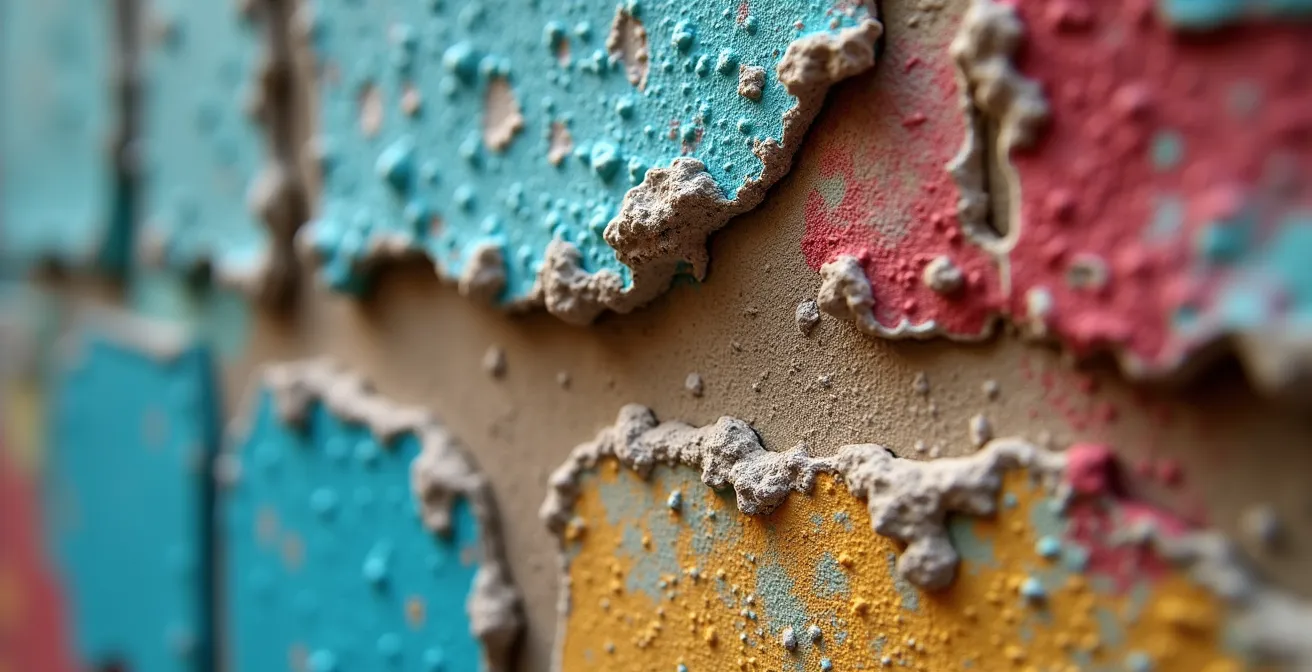
Unlike a painting protected in a climate-controlled museum, street art is in a constant battle with the elements. Sun, rain, and pollution are relentlessly working to fade its colors and peel its paint. This inherent ephemerality is a core part of its identity. A mural you see today might be a ghost of its former self next year, or gone entirely, painted over to make way for a new piece or a new building. This isn’t a flaw; it’s a feature. It imbues the work with a sense of urgency and makes your experience of it unique and time-sensitive.
This transient nature is what I call the “ephemeral dialogue.” The wall is a living canvas where conversations happen over time. An older piece fades, a new one appears, sometimes even incorporating remnants of what was there before. The evolution of techniques also contributes to this cycle. For example, UPFEST founder Steve Hayles noted that in the festival’s early days, the majority of artists used stencils, a quick and effective method. Today, he observes that only 5% of artists now use stencils, with most preferring freehand spray painting or large-scale brushwork. This shift changes the look, feel, and lifespan of the art being produced.
Some projects attempt to fight this decay. Digital archives like the Google Arts & Culture Street Art Project create high-resolution records of murals, preserving them for posterity. However, this raises a philosophical question: can a digital image ever replace the experience of standing before a massive, sun-beaten wall, seeing its textures and imperfections up close? The physical presence and the knowledge that it won’t last forever are what make the encounter so powerful. So, when you hear about a new festival or a stunning mural, don’t put it on a “someday” list. Go see it now. You are not just a spectator; you are a temporary witness to a fleeting moment in the city’s artistic life.
How to Photograph Murals Without Blocking the Sidewalk or Annoying Residents?
You’ve found the perfect mural, the light is just right, and you want to capture it. As a guide, this is where I see the most friction between tourists and locals. It’s crucial to remember that you are a guest in someone’s neighborhood. The mural may be a public piece of art, but the sidewalk in front of it is a public thoroughfare, and the building it’s on is someone’s home or business. Practicing ethical photography is non-negotiable.
The number one rule is spatial awareness. Never block the sidewalk. Pedestrians, people with strollers, and wheelchair users need to get by. Instead of standing in the middle of the pavement, find a less obtrusive spot. Step into an alcove, stand close to the curb, or, even better, cross the street. Using a longer lens from a distance not only keeps you out of the way but can also help you capture the entire mural without distortion. Pay attention to your surroundings; those are real apartments with real people living inside. Avoid pointing your camera directly into windows and be mindful of the noise you’re making, especially if you’re with a group.
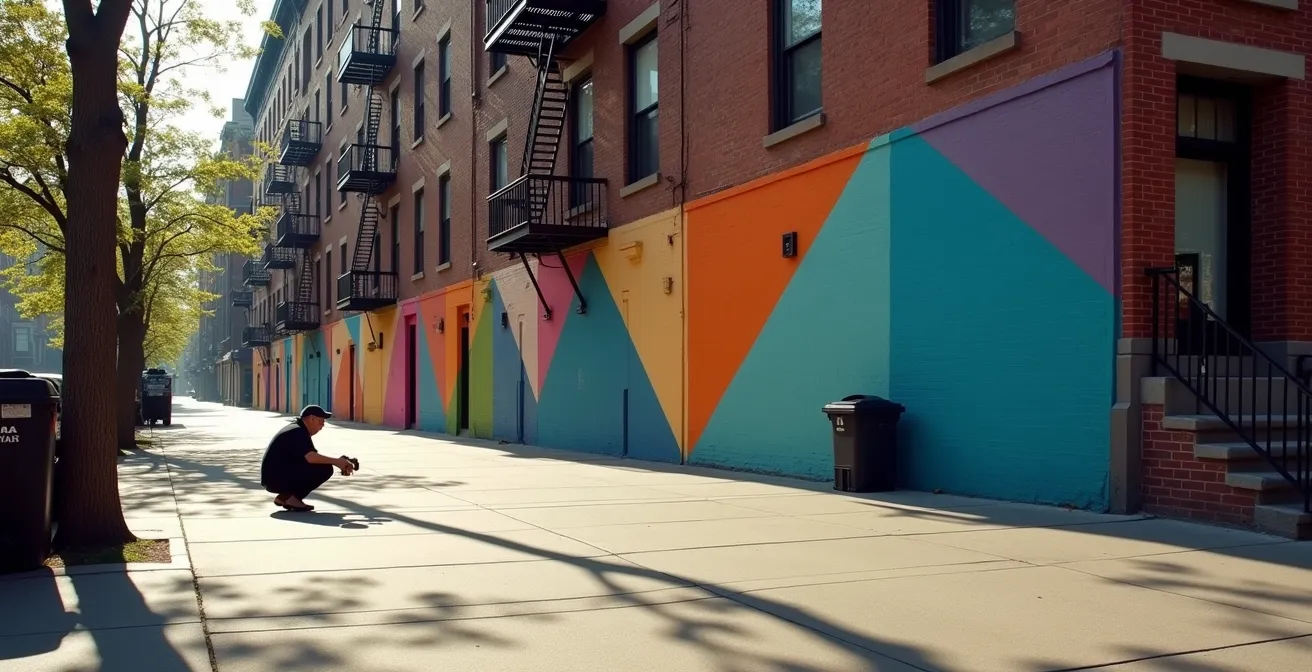
Another point of contention is geotagging, especially for non-sanctioned or “hidden” pieces. While it might be tempting to share the exact location of a cool piece you found in an abandoned lot, think twice. Broadcasting the location can lead to overcrowding, vandalism, or unwanted attention from authorities, potentially ruining the spot for the local scene. For major, commissioned festival walls, geotagging is generally fine. For everything else, consider being more general (e.g., “Somewhere in the Arts District”) to preserve the magic of discovery for others.
Ultimately, the goal is to document the art without disrupting the community it belongs to. Be quick, be quiet, and be aware. The best photographers are the ones you barely notice are there. Your respect will be appreciated by the residents and will help ensure that artists and visitors remain welcome in the neighborhood for years to come.
Why Murals Appear Just Before Rents Go Up in a Neighborhood?
It’s a pattern I’ve seen in cities all over the world. First come the artists, then the murals, then the coffee shops, and then… the rent hikes. This phenomenon is often called “aesthetic gentrification.” Large-scale, colorful murals are highly visible symbols of change. They signal that a neighborhood is becoming safer, more creative, and more “desirable.” While this sounds positive, it’s often the first step in a process that can lead to the displacement of long-term, lower-income residents.
Developers and landlords are not blind to this. They understand that a vibrant arts scene increases property values. Sometimes, they even commission murals themselves to accelerate this process and attract a wealthier demographic. The art acts as a beautification project that masks the underlying economic shifts. For the original residents, it’s a bittersweet experience. Their neighborhood becomes cleaner and more celebrated, but it also becomes more expensive. A Bushwick resident, for instance, reported her rent increased by 58% over three years as the area’s street art scene exploded.
The data clearly shows this correlation between the introduction of murals and significant economic changes in a neighborhood. A comprehensive study of murals in Cincinnati provides a clear picture of their impact.
| Metric | Areas with Murals | Areas without Murals |
|---|---|---|
| Income Growth Rate | Faster increase | Slower increase |
| Property Values | Accelerated rise | Standard appreciation |
| Foot Traffic | Significantly higher | Baseline levels |
| Vacancy Rates | Higher | Lower |
| Crime Rates | No significant difference | No significant difference |
As the analysis from Cincinnati shows, areas with murals saw faster income growth and accelerated property values. Interestingly, they also had higher vacancy rates, which can suggest that original tenants are moving out (or being priced out) before new, higher-paying tenants move in. This data confirms that while murals bring vitality, they are also a key ingredient in the complex and often painful recipe of urban gentrification.
The Prestige Trap: When a Prime Address Hides Mediocre Curation
As street art festivals become bigger and more commercially successful, they face a dangerous temptation: the prestige trap. This happens when the primary goal shifts from fostering authentic artistic expression to simply attracting big names and creating “Instagrammable” moments. The focus moves to artists with huge social media followings, whose work is often visually pleasing but lacks depth or connection to the local environment. The festival becomes a collection of celebrity artist appearances rather than a cohesive, thoughtful exhibition.
This can lead to what one critic has termed the “‘Disneyfication’ of street art culture.” In her analysis of festival trends, street art blogger Giulia notes that this results in an overabundance of “colorful, eye-catching murals, often painted by artists chosen for their large Instagram followings,” which can create a homogenous, corporate-friendly aesthetic. The raw edge, the political commentary, and the site-specific ingenuity that defined the art form get sanded down in favor of what is safe, popular, and easily shareable online. The “prestige” of having a famous artist’s work becomes more important than the quality or relevance of the work itself.
As a traveler, this is where you need to become a more critical observer. Don’t be swayed by a big name alone. A festival in a prime location with a roster of star artists can still feel hollow if the curation is lazy. The best festivals are those that create a dialogue, balancing international stars with local talent and ensuring the art responds to the unique character of the neighborhood it inhabits. Before you visit a festival, do a little research to see if it’s fallen into the prestige trap.
Your Checklist for Evaluating a Street Art Festival’s Quality
- Artistic Diversity: Look beyond the Instagram-friendly murals. Is there a mix of styles, from abstract and freehand to stencils and paste-ups?
- Artist Balance: Assess the ratio of local talent to international stars. A good festival nurtures its own community, not just imports fame.
- Site-Specificity: Does the artwork respond to the building, the street, or the local history? Or could it be painted anywhere?
- Thematic Coherence: Is there a guiding theme or narrative, or is it just a random collection of cool pictures?
- Sponsor Influence: Check who the sponsors are. Does their influence seem to have sanitized the content, removing any political or controversial edge?
Using this framework from experts at Urbaneez can help you look past the hype and identify the festivals that are truly advancing the art form. The most rewarding experiences are found where curation is thoughtful and the art feels like it truly belongs.
Key Takeaways
- Street art’s economic impact is a double-edged sword, boosting property values while often fueling gentrification that displaces local communities.
- The “authenticity” of street art is a central conflict: the polished, sanctioned festival mural versus the raw, illegal alley tag each offer a different kind of truth.
- To be a responsible art tourist, you must practice ethical exploration: plan your route, be aware of residents, and photograph murals without disrupting the neighborhood.
Urban Art Narratives: How Street Art Speaks for Marginalized Communities?
Before it was a tool for urban renewal, street art was, and still is, a voice for the voiceless. In marginalized communities, graffiti and murals have long been a way to claim space, tell stories, and build identity in environments where mainstream representation is absent. These walls are not just decorated surfaces; they are public forums, history books, and memorials. They speak of struggle, resilience, pride, and protest when no one else is listening.
This is why the issue of gentrification is so painful. When new, commissioned murals appear, they often literally paint over the grassroots tags and pieces that held deep meaning for the community. The narrative of the neighborhood is rewritten, with the stories of the original residents being replaced by art that is more palatable to a new, wealthier audience. As housing justice advocate Anthony McCormick powerfully states, ” Destroying a mural is equivalent to silencing a community.” It’s an erasure of collective memory.
Case Study: Richmond’s Jackson Ward
Jackson Ward, a historically Black neighborhood in Richmond, Virginia, is a poignant example of this dynamic. Once a “redlined” area, its walls were filled with graffiti that was a form of community expression and territorial marking. Today, as described by local journalists, the neighborhood features large, commissioned murals that coincide with rising property values and new development. This transformation from unsolicited tags to curated art highlights the tension between cultural preservation and economic progress, leaving many original residents to question whose stories are now being told on their walls, and for whom.
The most powerful urban art acknowledges this tension. It engages with the community, involves local artists, and tells stories that resonate with the people who live there. As a visitor, understanding this context adds immense depth to your experience. That vibrant mural might be beautiful, but it’s also part of an ongoing conversation about identity, ownership, and the very soul of the neighborhood. It’s your job to listen closely.
Exploring the world of street art is to witness a culture in constant motion. It’s more than a replacement for museums; it’s a living, breathing, and often contentious dialogue about art, community, and commerce unfolding on the canvas of the city itself. To truly appreciate it, you must become more than a tourist—you must be a curious and respectful observer. Begin your journey by researching a local arts district, and when you visit, challenge yourself to find the story behind the wall.