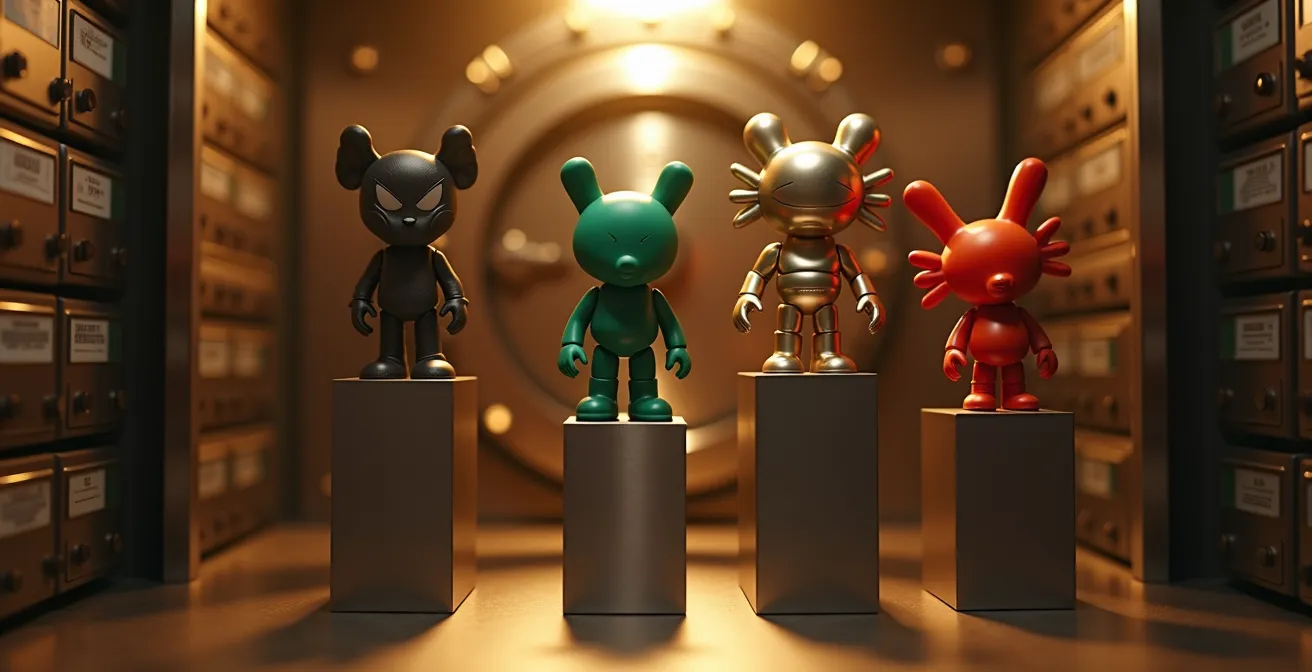
The insane prices of urban collectibles aren’t random; they follow predictable financial patterns that can be mastered.
- The condition of the box is a tangible asset; a minor dent can instantly trigger a 30% value erosion.
- Drop mechanics like lotteries or timed releases are not just about hype; they are engineered to dictate initial price spikes and secondary market velocity.
- Authentication isn’t a hobby, it’s critical risk management in a market where fakes can wipe out 100% of your investment.
Recommendation: Treat every piece not as a toy, but as a tradable asset with a clear strategy for acquisition, preservation, and liquidation.
You see a KAWS Companion or a 1000% Bearbrick listed for the price of a used car and wonder how a piece of plastic can command such a fortune. The common advice you hear is to “buy what you love,” a safety net for the heart if your wallet takes a hit. Many collectors focus on the thrill of the hunt, the aesthetics, and the community. While these are valid parts of the culture, they completely miss the point from an investment perspective. This isn’t just about collecting; it’s a high-stakes financial game played with vinyl and resin instead of stocks and bonds.
The truth is, this market isn’t driven by sentiment alone. It’s a calculated ecosystem of manufactured scarcity, controlled depreciation, and aftermarket arbitrage. Forgetting this is the fastest way to end up with a very expensive dust collector. The difference between a savvy investor and a mere enthusiast lies in understanding the hidden financial rules that govern this space. It’s not about loving the art; it’s about mastering the asset.
This guide isn’t about appreciating art; it’s about appreciating assets. We’re going to break down the core financial pillars that turn plastic into gold. We’ll dissect how packaging integrity dictates value, how to perform due diligence on authenticity, understand the market mechanics of a drop, preserve your asset’s physical state, and ultimately, know the precise moment to liquidate for maximum profit. This is your playbook for shifting from a collector to a serious player in the urban collectibles market.
This article provides a comprehensive framework for navigating the financial intricacies of the urban collectibles market. Explore the sections below to master each aspect of this high-stakes investment game.
Summary: A Financial Playbook for Urban Art Toys
- Why a Dent in the Box Devalues Your Collectible Figure by 30%?
- How to Identify a Fake KAWS Companion by Checking the Feet Stamps?
- Timed Release or Lottery: Which Drop Mechanism Creates More Value Spike?
- The Yellowing Plastic: Why You Must Keep Your Collection Out of UV Light?
- How to Display Your Collection to Look Like Art, Not a Toy Store?
- Functional Game Sword or Fashion Hat: Which Virtual Item Retains Value Better?
- When to Sell: The Price Spike That Happens Immediately After an Edition Sells Out
- Exclusive Works Online: How to Gain Access to “Hidden” Digital Rooms?
Why a Dent in the Box Devalues Your Collectible Figure by 30%?
In the world of urban collectibles, the box isn’t just packaging; it’s an integral part of the asset’s value. Newcomers often make the critical mistake of treating the box as disposable, a simple container for the “real” prize inside. This is a catastrophic financial error. In this market, the mantra is “condition is king,” and that rule applies with brutal force to the packaging. A crushed corner, a tear in the cardboard, or a broken seal isn’t a minor imperfection; it’s a significant, quantifiable hit to your Return on Investment (ROI).
Think of the original box as the collectible’s birth certificate and life-support system. It proves provenance and guarantees the piece has been protected. Market data is clear: mint and near mint figurines command significantly higher prices than those rated merely fine or poor. The difference isn’t trivial. An unsealed but otherwise perfect piece might lose 10-15% of its value instantly. A piece that has been displayed and then repackaged can see its value plummet by 35% or more. This is why you see serious collectors shrink-wrapping their sealed boxes; they’re not being paranoid, they’re preserving capital.
The impact of box condition on financial value is stark and well-documented. An analysis of the secondary market shows a clear hierarchy of value based on packaging integrity. The following table illustrates the immediate financial consequences of different box conditions:
| Condition Grade | Box Status | Value Impact |
|---|---|---|
| Mint in Sealed Box (MISB) | Factory tape intact | Maximum value |
| Mint in Box (MIB) | Opened but complete | -10% to -15% |
| Back in Box (BIB) | Repackaged | -25% to -35% |
| Loose | No original packaging | -40% to -60% |
This isn’t just a theory; it’s proven at the highest end of the market. Consider the KAWS Companion Four-Foot figure. In pristine, boxed condition, it can fetch prices upwards of $100,000. That same figure, loose and without its original packaging, would struggle to achieve even half that value. The box isn’t just cardboard; it’s a non-negotiable component of the asset’s financial structure.
How to Identify a Fake KAWS Companion by Checking the Feet Stamps?
If a damaged box represents a 30% loss, a counterfeit piece represents a 100% loss. The explosion in popularity of artists like KAWS has flooded the secondary market with fakes, some of which are deceptively sophisticated. Buying a counterfeit isn’t just an embarrassing mistake; it’s a complete wipeout of your investment. Therefore, authentication isn’t a suggestion; it’s a mandatory process of authenticity due diligence. Your first line of defense is knowing the product better than the counterfeiter.
For KAWS figures, the devil is in the details, particularly on the feet. Authentic pieces have specific stamps with clean, consistent font thickness and spacing. Fakes often get this wrong—the text can be too thick, too thin, or unevenly pressed. Another major tell is the overall build quality. An authentic KAWS figure, produced by Medicom Toy, will have perfect seams, no glue stains, and a substantial, solid weight. Fakes often feel hollow, lighter, and show signs of sloppy assembly, like visible glue residue around the joints.
The problem of counterfeits is not a minor one. According to collector Selim Varol, a staggering 50% of KAWS toys examined turn out to be counterfeits. This statistic underscores the critical need for a rigorous authentication process before any capital is deployed. Failing to do so is equivalent to flipping a coin on your entire investment.
Your KAWS Authentication Playbook: The 5-Point Check
- Examine the feet stamps: Scrutinize the font for correct thickness and kerning. Fake figures often feature text with incorrect weight or inconsistent impressions.
- Inspect for assembly flaws: Check for glue stains and poorly fitted plastic pieces. Authentic KAWS pieces have perfectly attached parts without any visible adhesive residue.
- Verify the depth of facial features: Authentic figures have bold, deeply set ‘X X’ logos on the eyes and noticeably deep nostril holes. Fakes often have shallow, less defined features.
- Test the weight and density: Authentic KAWS toys never feel hollow. They have a substantial, premium weight that counterfeiters rarely replicate accurately.
- Look for the Medicom Toy hologram: On the packaging, check for the official hologram label. It should change color and appearance depending on the viewing angle, a feature often poorly imitated on fakes.
Mastering these checks transforms you from a potential victim into a discerning investor. This isn’t just about spotting a fake; it’s about protecting your portfolio from catastrophic loss.
Timed Release or Lottery: Which Drop Mechanism Creates More Value Spike?
The initial “drop” is where a collectible’s primary market value is set, but more importantly, it’s where its secondary market velocity is born. The method of release—be it a frantic “first-come, first-served” (FCFS) timed release or a randomized lottery—is a strategic choice by the brand to engineer hype and scarcity. Understanding the financial implications of each is key to knowing whether to participate, and how to price your asset on the aftermarket. The entire collectibles market is exploding, with a projected value of $306.44 billion in 2024, and drop mechanics are a primary engine of this growth.
A timed release creates a massive, immediate spike in demand and perceived value. The chaos of everyone trying to buy at once fuels FOMO (Fear Of Missing Out) and makes the item feel incredibly desirable. For flippers, this is often the ideal scenario. The instant sell-out creates headlines and a wave of failed buyers who are immediately willing to pay a premium on the secondary market. The value spike is sharp, immediate, and often volatile.
A lottery or raffle system, conversely, diffuses the initial hype. While it’s seen as a “fairer” system, it doesn’t create the same frenzied buying pressure. The value spike tends to be more controlled and may build more slowly as winners receive their items and the true supply on the secondary market is gradually revealed. This can sometimes lead to a more stable, but less explosive, initial price appreciation. From a pure investment perspective, the timed release often creates a more profitable short-term flipping opportunity, while the lottery creates a more predictable entry point for long-term holders.
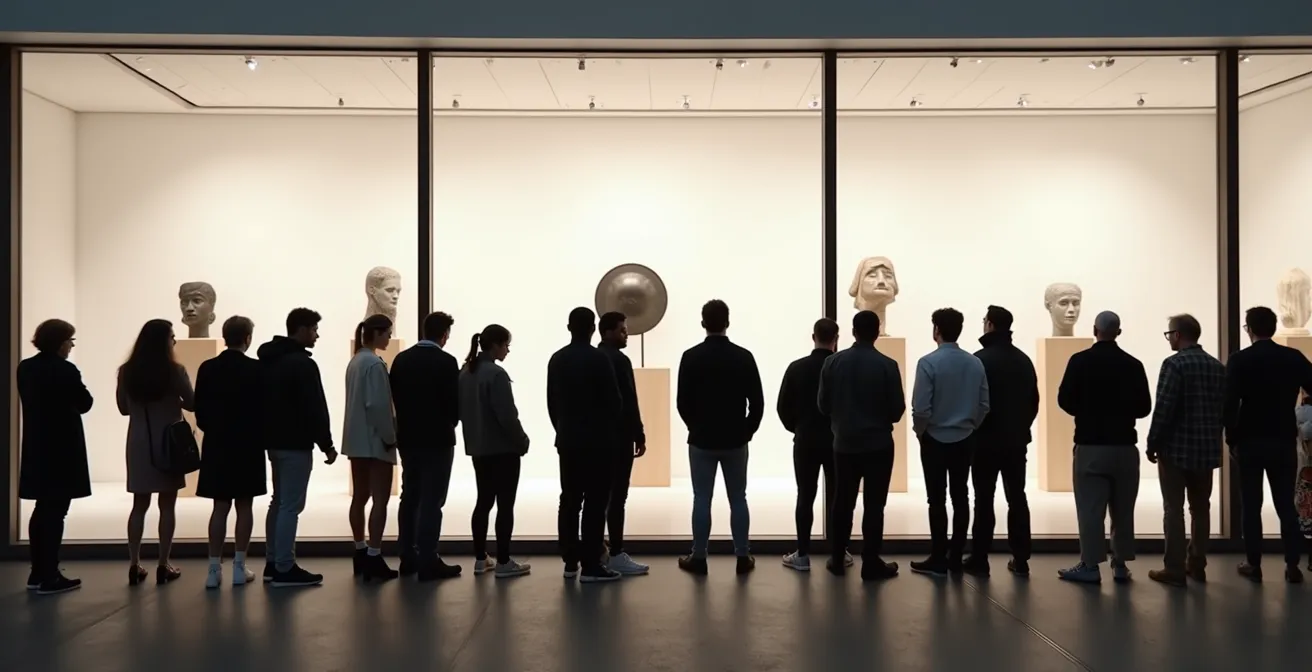
The choice of mechanism reflects the brand’s strategy. A timed release caters to bots and seasoned flippers, generating maximum buzz. A lottery caters to the broader collector base, building brand loyalty. As an investor, your strategy must adapt accordingly. For a timed drop, be prepared for immediate listing. For a lottery win, you may have more time to gauge the market before selling.
The Yellowing Plastic: Why You Must Keep Your Collection Out of UV Light?
You’ve secured the drop, authenticated your piece, and kept the box pristine. Your asset is safe, right? Wrong. The very environment it exists in is a constant threat to its value. One of the most insidious forms of value erosion for vinyl and plastic collectibles is photodegradation, commonly known as “yellowing.” This is a slow, silent killer of your investment’s worth, caused primarily by exposure to Ultraviolet (UV) light.
Most designer toys are made from PVC (Polyvinyl Chloride) or ABS (Acrylonitrile Butadiene Styrene) plastics. When exposed to UV radiation—from direct sunlight or even some indoor lighting—the chemical bonds within the plastic begin to break down. This process releases molecules that cause a distinct and irreversible yellow or brownish tint. A crisp, white KAWS figure that has yellowed is no longer considered mint, regardless of its physical condition. This discoloration can slash its market value by 50% or more, as serious collectors view it as permanently damaged.
Protecting your collection is not about simply putting it on a shelf. It requires an active, museum-grade archival strategy. This means controlling the entire environment: light, temperature, and humidity. Direct sunlight is the number one enemy. Even a spot in a bright room can cause damage over time. The only way to ensure the long-term stability and value of your plastic assets is to treat their display and storage with the same seriousness as a museum curator protecting a priceless artifact. Anything less is just letting your money slowly dissolve in the light.
- UV-Filtering Films: Apply these transparent films to any windows in the room where your collection is displayed. They block over 99% of harmful UV rays without obscuring the view.
- Sealed Acrylic Cases: Do not use cheap display boxes. Invest in high-quality, sealed acrylic cases that have a stated UV protection rating. This provides a micro-environment for the piece.
- Stable Climate Control: Maintain a consistent temperature (ideally 65-70°F or 18-21°C) and humidity level (40-50%). Fluctuations can cause plastic to become brittle.
- Strategic Placement: Never place displays in direct sunlight. Be aware of reflective surfaces that might bounce light onto your collection. Use LED lighting, which emits negligible UV, instead of fluorescent or incandescent bulbs.
Think of this as asset insurance. You wouldn’t leave a stack of cash in the sun to fade; don’t do it to your asset-grade plastic either.
How to Display Your Collection to Look Like Art, Not a Toy Store?
How you display your collection is the final step in transforming it from a hobby into a high-value portfolio. A shelf crammed with figures looks like a toy store; a single, well-lit piece on a pedestal looks like an art gallery. This isn’t just about aesthetics; it’s about curation as capital appreciation. The perceived value of your collection skyrockets when it is presented with intention, space, and professional lighting. It signals to potential buyers that these are not toys, but significant cultural artifacts and valuable assets.
The core principle of art curation is “less is more.” Overcrowding devalues every piece. By giving an object “room to breathe,” you are telling the viewer that it is important and deserves individual attention. Use museum-style plinths, floating shelves, and dedicated spotlights to isolate and elevate key pieces. Group items by artist, color, or theme to create a cohesive visual narrative, rather than a chaotic jumble. This thoughtful presentation reinforces the idea that these collectibles are extensions of an artist’s primary work, transforming them from mere objects into art installations.
Case Study: Curation Transforms Object into Art
High-end collectibles are often directly inspired by an artist’s fine art, incorporating recognizable visual ‘brands’ like Banksy’s Flower Thrower or Yayoi Kusama’s pumpkin motif. When a collector takes a Kusama pumpkin figure and displays it singularly under a spotlight in a minimalist living room, they are not just showing a toy. They are creating a dialogue with Kusama’s larger body of work, effectively transforming the collectible into a piece of installation art and dramatically increasing its perceived cultural and financial value.
The materials you use for display also matter. Museum-quality acrylic cases (with UV protection, as discussed) and stone or high-density composite pedestals communicate value. Ditch the cheap plastic risers and cluttered glass cabinets. Your goal is to create an environment that mirrors a high-end gallery or a page from an architectural design magazine. This not only increases your own enjoyment of the collection but also acts as a powerful marketing tool when the time comes to sell.

Ultimately, a curated display is a statement of confidence in the value of your assets. It tells the world—and any future buyer—that you understand the cultural and financial weight of what you own.
Functional Game Sword or Fashion Hat: Which Virtual Item Retains Value Better?
While the physical toy collectibles market is projected to grow at a blistering 10.6% CAGR to reach $45.2 billion by 2032, a parallel universe of collecting is booming in the digital realm. The principles of scarcity and demand apply, but the nature of the asset is fundamentally different. When comparing virtual items, such as a functional in-game sword versus a purely cosmetic “fashion” hat, we see a fascinating split in value retention that offers lessons for physical collectors.
A functional game sword derives its value from utility. Its price is tied to its effectiveness within the game’s meta. When the game developer releases a new, more powerful sword, the old one becomes obsolete, and its value plummets. It’s an asset with a built-in obsolescence, its value tied to a fluctuating and externally controlled system. It’s a high-risk, high-volatility play, much like a hyped-up but ultimately unproven collectible figure that could fall out of favor.
A purely cosmetic fashion hat, on the other hand, derives its value from aesthetics, rarity, and cultural status—exactly like a KAWS figure. Its value isn’t tied to game mechanics that can change. It is a status symbol. Its rarity is fixed, and its desirability is driven by community trends and historical significance (“one of the first-ever released items”). These cosmetic items often retain and grow their value far more consistently over the long term because their core attributes are immutable. They are the Bearbricks of the digital world.
This digital-world lesson is directly applicable to physical collectibles. The pieces that hold value best are not those with a gimmicky “function” (e.g., a light-up feature that can break) but those with pure, iconic, and immutable aesthetic value. As one market report aptly puts it:
The growing perception of collectibles as alternative investment assets is driving market growth beyond traditional play value
– Verified Market Research, Toy Collectibles Market Report 2024
The takeaway for the serious investor is clear: bet on the “fashion hat,” not the “functional sword.” Bet on pure aesthetic and cultural capital, as this is the most durable store of value.
Key Takeaways
- Condition is Non-Negotiable: The box is part of the asset. A pristine box can represent up to 60% of the collectible’s total value compared to a loose item.
- UV is a Silent Killer: Irreversible yellowing from light exposure can destroy over 50% of your asset’s value. Archival-grade protection is not optional.
- Curation is Appreciation: How you display your collection directly impacts its perceived value. Treat each piece like a gallery installation, not a toy on a shelf.
When to Sell: The Price Spike That Happens Immediately After an Edition Sells Out
Acquiring a valuable asset is only half the equation. The other half is knowing the precise moment to liquidate for maximum profit. In the urban collectibles market, which now represents a massive 18% of overall toy sales volumes, timing is everything. The most predictable and exploitable phenomenon is the “Hype Spike”—the sharp, often irrational, increase in price that occurs in the first 24-72 hours after a limited edition sells out. This is your first and often most profitable window for liquidation.
This spike is driven by pure market psychology: a cocktail of FOMO from those who missed the drop, media hype celebrating the instant sell-out, and a temporary supply vacuum. Buyers who failed to secure the piece at retail are at their most desperate and willing to pay a significant premium to avoid feeling left out. This is the flipper’s paradise. However, this window is fleeting. What follows is often the “Flipper’s Dip.”
As early sellers flood the market to take their quick profits, supply increases, and prices inevitably correct downwards. This dip is followed by a longer “Stabilization Trough” where the market tries to find the true, sustainable value of the piece. For investors, understanding this cycle is critical. Riding the initial Hype Spike requires speed and a pre-planned exit strategy. Holding through the dip is a bet on the piece’s long-term cultural relevance and potential for future growth. The key is to have a clear thesis: are you playing the short-term arbitrage or the long-term appreciation game?
The typical price evolution after a hyped drop can be broken down into distinct phases. The following data, based on secondary market analysis, provides a roadmap for your exit strategy.
| Phase | Timeframe | Price Movement | Market Activity |
|---|---|---|---|
| Hype Spike | First 24-72 hours | +50% to +200% | High volume, FOMO buying |
| Flipper’s Dip | Days 4-14 | -20% to -40% | Early sellers take profit |
| Stabilization Trough | Weeks 3-8 | Flat to +10% | Price discovery phase |
| Long-Term Growth | 3+ months | Variable | Collector accumulation |
The decision of when to sell must be made *before* you buy. Define your goal—quick flip or long-term hold—and execute with discipline, ignoring the emotional rollercoaster of the market.
Exclusive Works Online: How to Gain Access to “Hidden” Digital Rooms?
In the urban collectibles game, the final frontier isn’t just about what you can buy, but *where* you can buy it. As your portfolio and reputation grow, you’ll discover that the most valuable opportunities aren’t on public-facing websites. The real alpha is found in “hidden” digital rooms: private Discord servers, password-protected online stores, and artist-direct email lists. Gaining access to these channels is the ultimate goal for any serious investor, as it provides access to pre-public sales, exclusive editions, and insider information.
How do you get in? It’s not about money; it’s about credibility and contribution. You build a reputation by being an active, knowledgeable, and respected member of the community on public forums and social media. You share insights, help authenticate pieces for others, and demonstrate a deep understanding of an artist’s work. This social capital is then “cashed in” for an invitation to a private group. It’s a world where your reputation is your key.
This contrasts sharply with the mass-market approach seen in mainstream retail. For example, GameStop has become a dominant force, selling an estimated $650 million in collectibles and holding a 28% market share in the U.S. by dedicating massive store space to these items. This is a volume game. The hidden digital rooms are the antithesis—they are a quality and exclusivity game. While retail provides liquidity for the masses, the private channels are where the next ten-bagger is often found, offered directly to a curated list of trusted collectors before the general public even knows it exists.
Entry into these circles is a long-term play. It requires patience and a genuine passion for the culture, not just the profit. You must provide value to the community before you can extract value from it. Start by engaging, sharing, and building your personal brand as a trusted expert. The invitations will follow. This is the final boss of collectible investing: moving from a consumer of hype to a source of it.
Now that you understand the financial mechanics, from box condition to exclusive access, the path is clear. Begin today to apply this investment-focused mindset. Audit your current collection, not for its sentimental value, but for its financial strengths and weaknesses. This is how you transform a passion into a high-performing asset class.